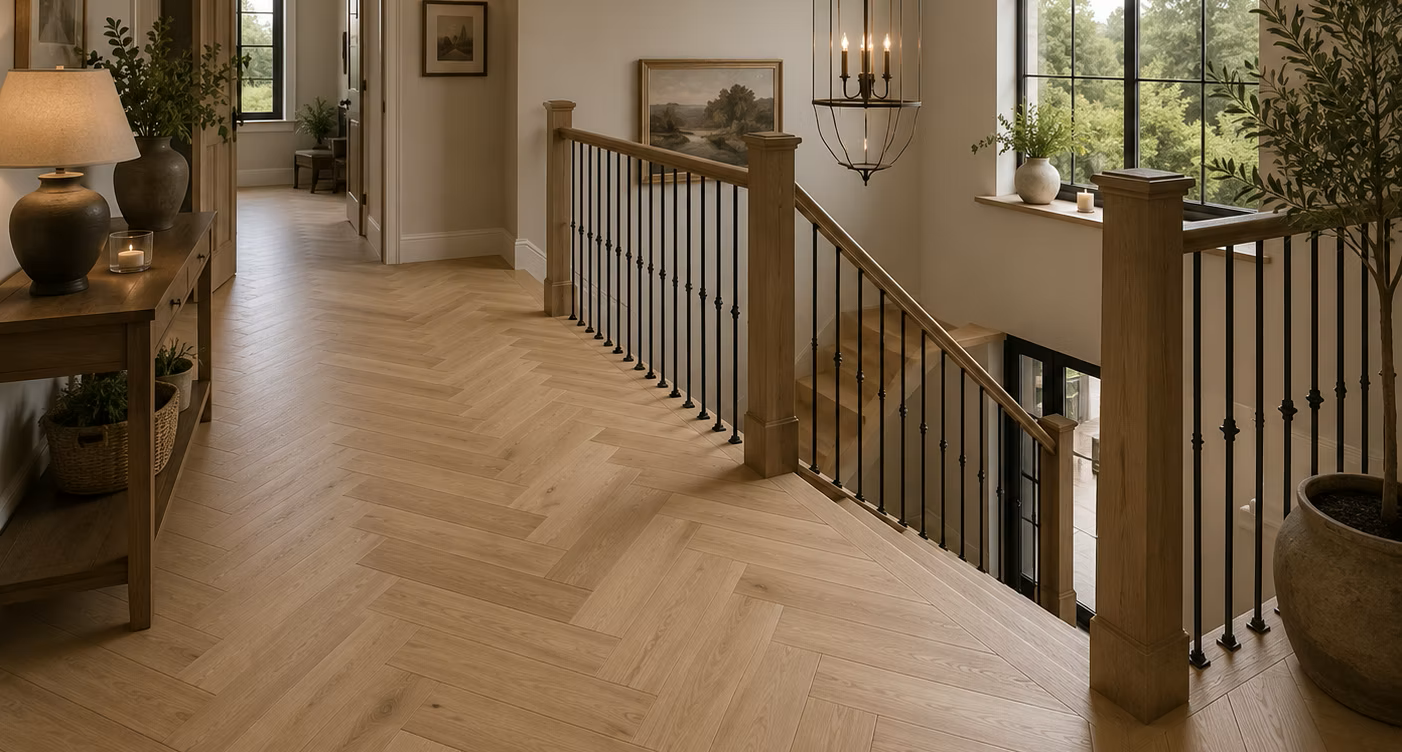
Where Design Meets Durability: The Best Rooms and Projects for Engineered Wood Flooring
Which rooms are perfect for engineered wood flooring and which are not...
When choosing surfaces for a high-end residential renovation or a commercial build, selecting a floor that stands up to the unique demands of each space is essential. While traditional solid timber is notoriously sensitive to environmental changes, engineered wood is a versatile, high-performance solution.
Engineered wood flooring is exceptionally stable, making it suitable for almost every room in a property—including environments traditionally off-limits to solid wood, such as kitchens, basements, and spaces with underfloor heating.
Choosing the right flooring involves matching structural capability with interior design goals. The following breakdown outlines how premium engineered planks perform across different rooms and high-end projects.
Room-by-Room Suitability Guide:
Living Rooms, Dining Areas, and Bedrooms - The Verdict: Highly Recommended (The Design Standard)
Why it works: These spaces are the heart of a home, where visual impact and comfort matter most. Engineered planks allow you to run expansive, seamless layouts through open-plan living areas without the need for unsightly expansion thresholds.
Kitchens - The Verdict: Excellent (With Proper Sealing)
Why it works: Kitchens experience frequent temperature swings, minor spills, and high foot traffic. Solid wood often warps or gaps under these conditions. Because of its multi-layered core, engineered wood resists moving when exposed to moisture and heat variations. Selecting a tough, polyurethane or UV-cured oil finish ensures spills can be wiped away without leaving stains.
Basements and Below-Grade Spaces - The Verdict: Perfect Solution
Why it works: Basements naturally have higher humidity levels and subfloor moisture. Solid timber cannot handle these conditions and will buckle. Engineered wood planks can be safely installed as a "floating floor" over a high-quality moisture barrier or glued directly to treated concrete, making it possible to have authentic hardwood in luxury basement conversions, media rooms, and home gyms.
Bathrooms and Wet Rooms - The Verdict: Proceed with Caution / Generally Restricted
Why it works: While engineered wood handles humidity brilliantly, it is not waterproof. Constant standing water, high steam, and pooling puddles can eventually seep into the seams and damage the core. For powder rooms (half-baths), it works perfectly. For full family bathrooms with showers and tubs, alternative luxury materials are usually more practical.
Recent Posts